The Berlin issue
Berlin Marathon Weekend for Everyone Who Isn't Running
The centre of Berlin closes to cars on 27 September 2026, and the people without a bib get the best of it. This is how to plan the three days around someone else's race.
By Robin van der MeerThe slow way through a fast city
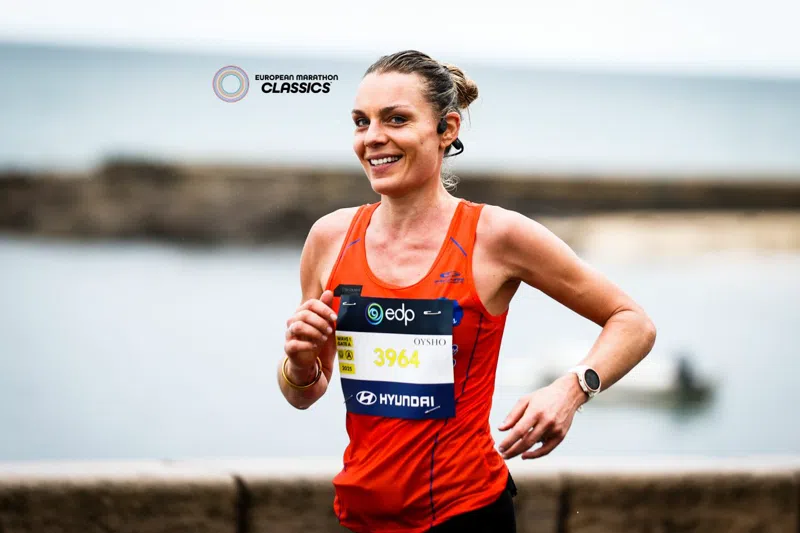
Straße des 17. Juni was laid out wide enough for parades long before it was laid out for sport, and for one Sunday each September it goes back to carrying crowds instead of cars. On 27 September 2026 the Berlin Marathon takes the middle of the city, out through Charlottenburg, past the TV Tower, down through Kreuzberg and Neukölln, and back along that avenue to the Brandenburg Gate, with the roads inside the loop closed to traffic for the morning. If you have come along for someone else's race, the closures work in your favour: three days of a capital with the engines switched off.
The expo lets anyone walk in
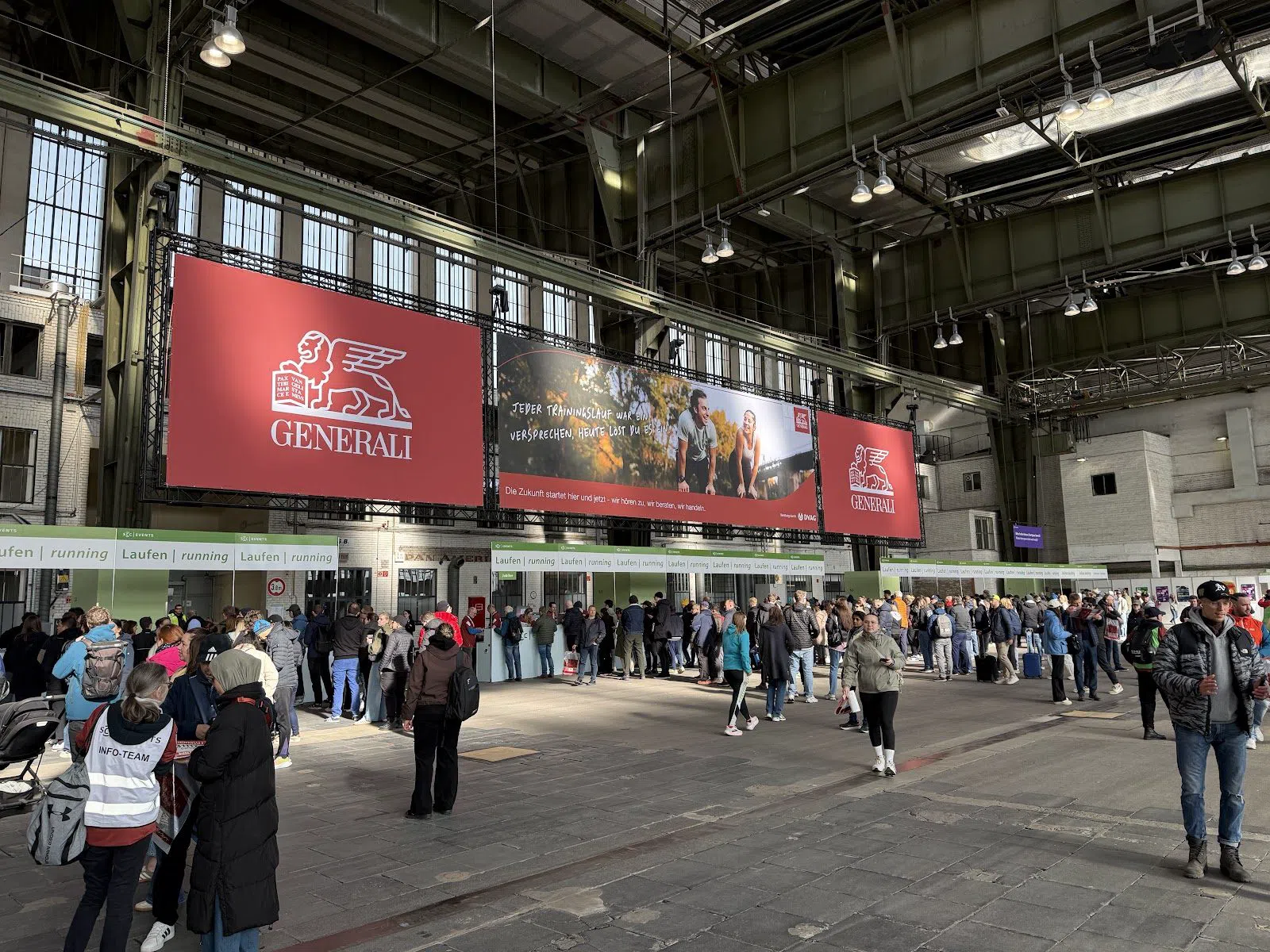
MARATHON EXPO by BRITA takes over the old terminal at Flughafen Tempelhof, ten minutes south of the centre on the U6 at Platz der Luftbrücke. It is free, unticketed and open to everybody. No bib, no runner in the family, no registration, and a group of any size can walk through the door. It runs Thursday 24 September 15:00–20:00, Friday 25 September 10:00–20:00 and Saturday 26 September 09:00–19:00, at Platz der Luftbrücke 5.
Go for the building as much as the stands. The terminal is a curved limestone slab of 1930s state architecture, one of the longest structures on the continent, and it later became the airfield the airlift flew into; the square outside is named for it. The departure hall is not somewhere you can otherwise wander on a whim. Inside, the expo runs on ordinary trade-fair logic, shoe brands and energy gels and a photo wall, but it is the one piece of race weekend a non-runner can attend without planning a thing.
If you are shepherding somebody who is actually racing, push for Thursday or Friday. Saturday afternoon is when every late arrival collects a bib, and forty minutes less standing in a queue matters more on Sunday morning than it sounds on Friday night.
Plan your Berlin trip
Live prices from our booking partners.
Free cancellation on many rooms. We may earn a commission when you book.
Saturday is for eating, and for the streets the race will take
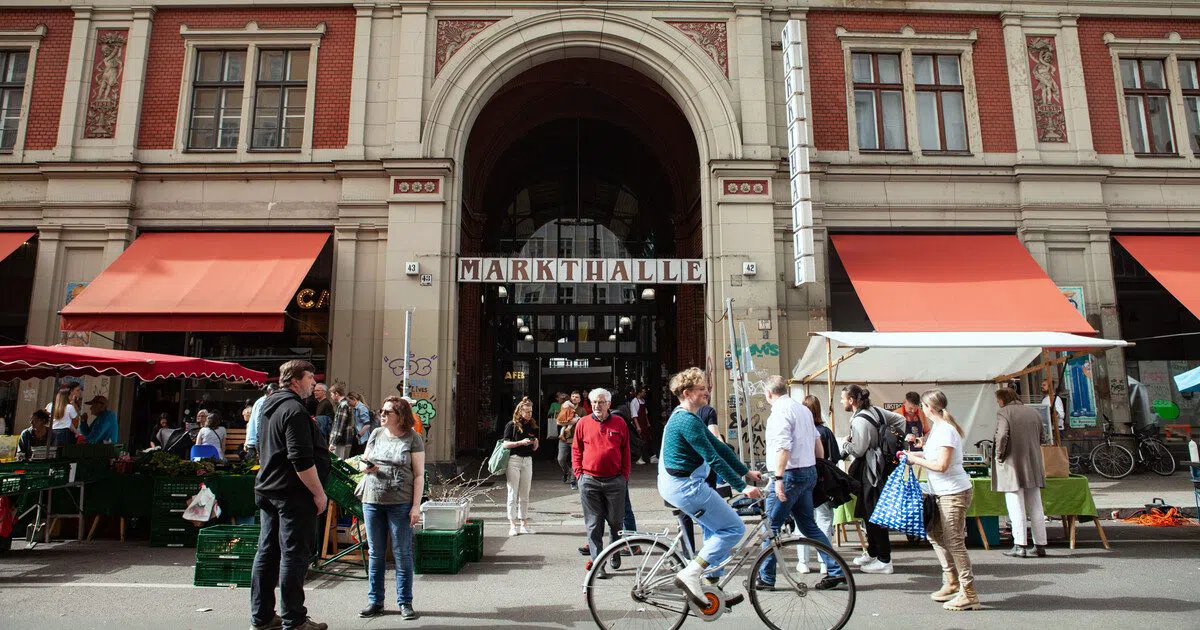
Markthalle Neun in Kreuzberg is the right Saturday lunch, partly because the market is at its fullest (the producer line-up runs 10:00–18:00) and partly because the course crosses this quarter the next morning, so you are walking Sunday's route a day early with a plate in your hand. Plates run €8–15. There are no reservations and no way to seat a group of eight together at one o'clock; split across counters, agree a table to converge on, and accept that somebody will eat standing up. That is the deal in every market hall and it is not worth fighting.
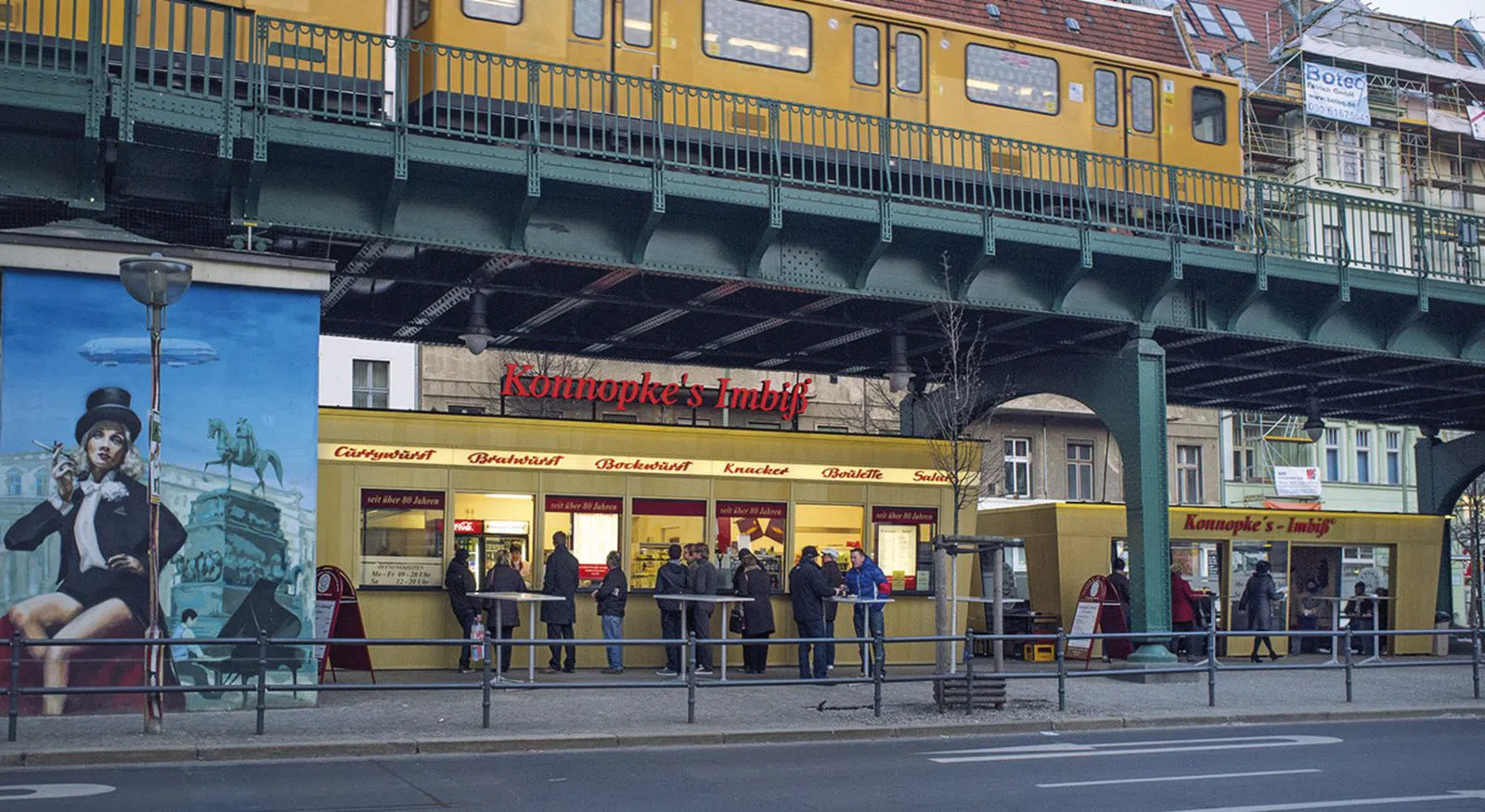
Konnopke's Imbiss sits in Prenzlauer Berg under the elevated U-Bahn tracks and has been selling currywurst since 1930, which in a city that has rebuilt itself this many times is a genuinely long tenure. Currywurst with chips is around €6–8. It is standing room only, so you queue, eat at a shelf and move on; it works for a group only in the sense that a group can all be there at once, not sit together. The critical detail is the opening: Monday to Friday 10:00–20:00, Saturday 12:00–20:00, closed Sundays. Eat here the day before the race, not on it.
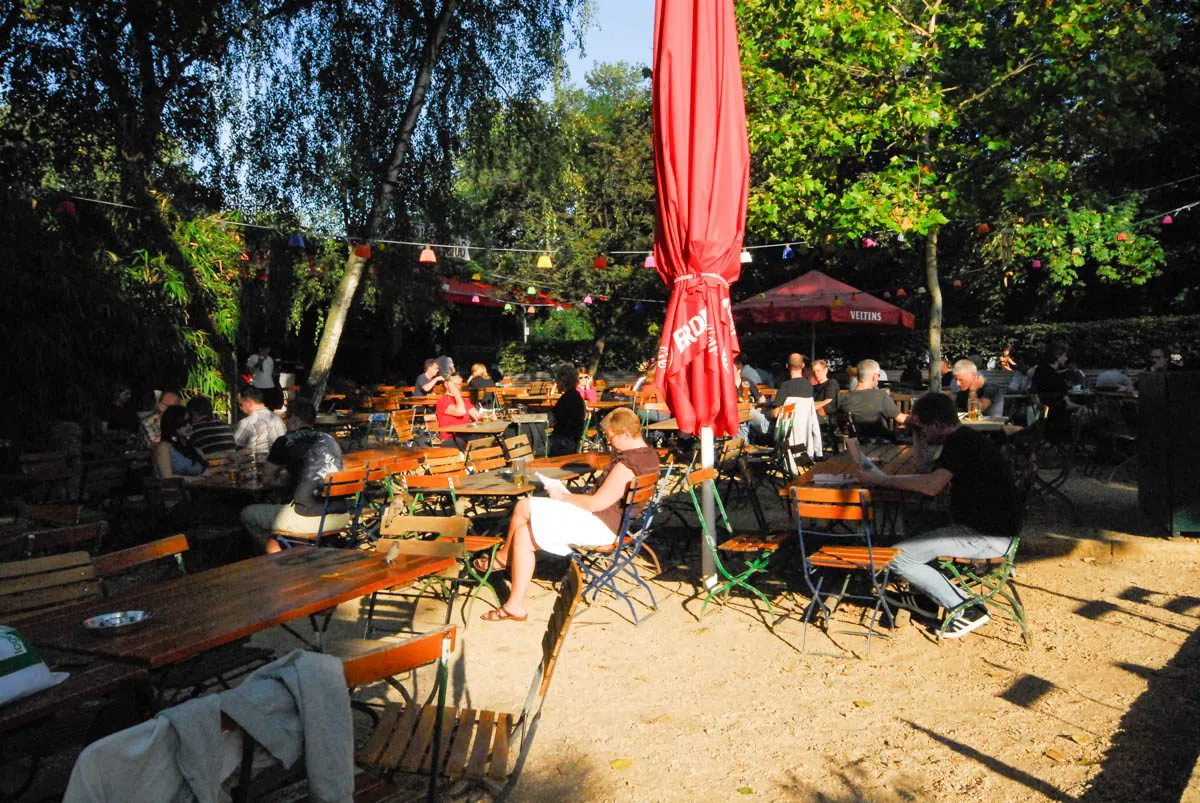
Schleusenkrug is the easiest first stop of the weekend, behind Zoologischer Garten station on the edge of the Tiergarten. Walk-in, self-service, benches under the trees, open daily 11:00–24:00, sausage and beer for under €15. Nobody takes reservations and nobody needs to; a group of ten is absorbed without anyone noticing. It is also the fallback when the park cafés further east are full, which on this particular weekend they will be.
Where to stand on Sunday morning
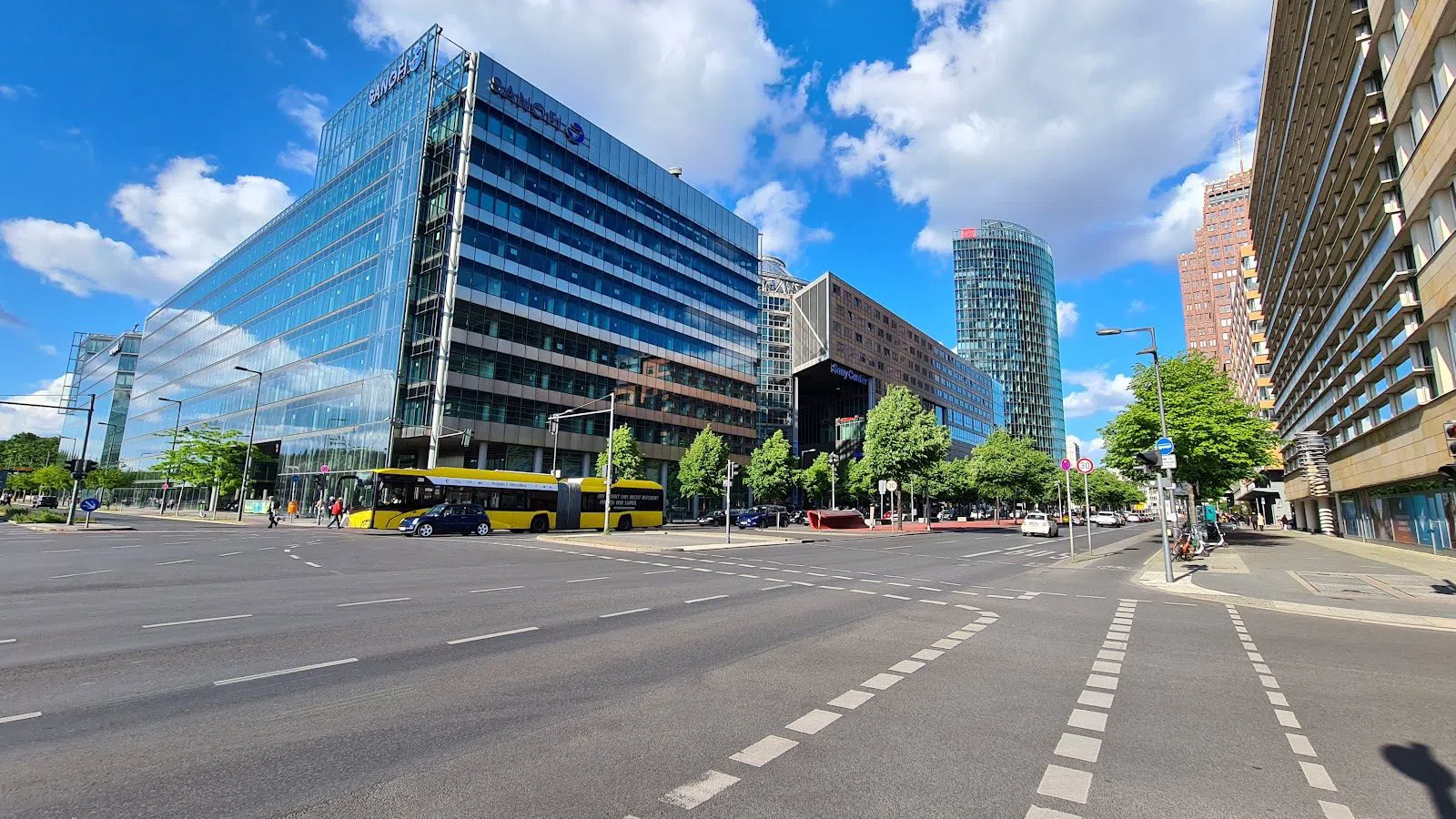
Two positions, in this order. Potsdamer Platz is roughly kilometre 38 of the course, an open street with no barriers to argue about and no limit on how many of you turn up. It is easy to reach and, more usefully, easy to re-reach, because the U- and S-Bahn run underneath the closed roads all morning. This is four kilometres from the finish, the stretch where the race stops being comfortable and starts being work, and a familiar face at that moment is worth more than one at the line.
Then walk. From Potsdamer Platz to the Brandenburg Gate finish straight, Straße des 17. Juni, is about twenty minutes on foot along the edge of the park, and it is comfortably quicker than the runner will manage the same distance. There are free standing grandstands on both sides of the avenue shortly before the line, open to anyone, with entry at the side of the Gate. They fill, so arrive as a group and arrive early. A paid seated grandstand exists on Unter den Linden if somebody in the party cannot stand for two hours, but the free stands give the better view of the last two hundred metres.

The thing that ruins more reunions than anything else is the phone network. Tens of thousands of people in one square kilometre all texting at once will beat any plan that depends on a signal. Agree a physical meeting point before anyone leaves the hotel; the official one is in front of the Paul-Löbe-Haus, organised by the first letter of the runner's surname, and it is the sensible default because it works whether or not your messages arrive.
Feeding the group before and after the finish
Café am Neuen See in the Tiergarten is ten minutes' walk from the finish area through the park, open daily 9:00–24:00, and big enough to swallow a group without strain. Mains are roughly €12–25 and beer around €5–6. Terrace tables with table service can be reserved and weekend brunch genuinely needs booking, so do it before you travel. The practical use of the place is as a holding pen: park the non-runners here with coffee while the race comes in, then collect the runner and stay put.
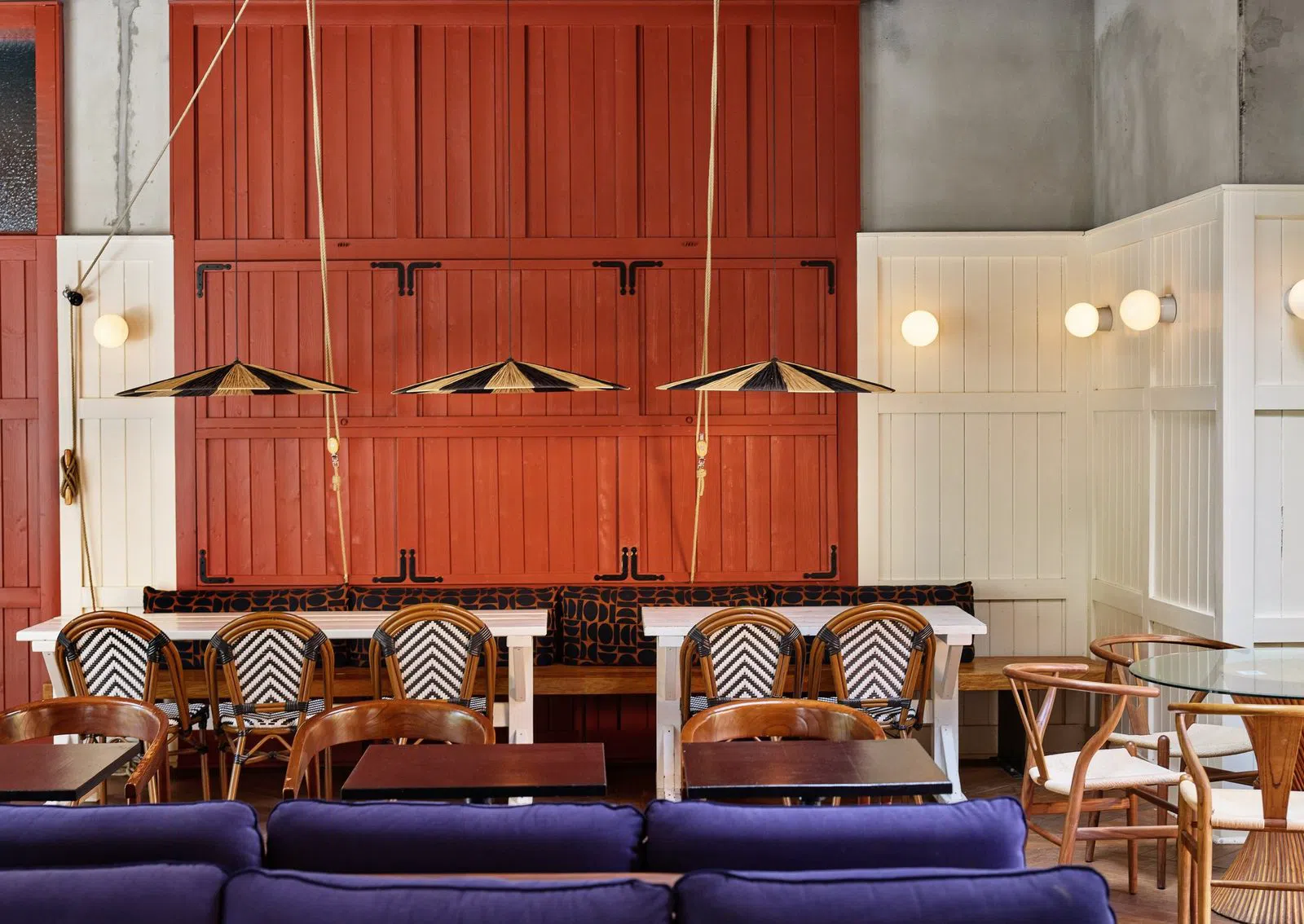
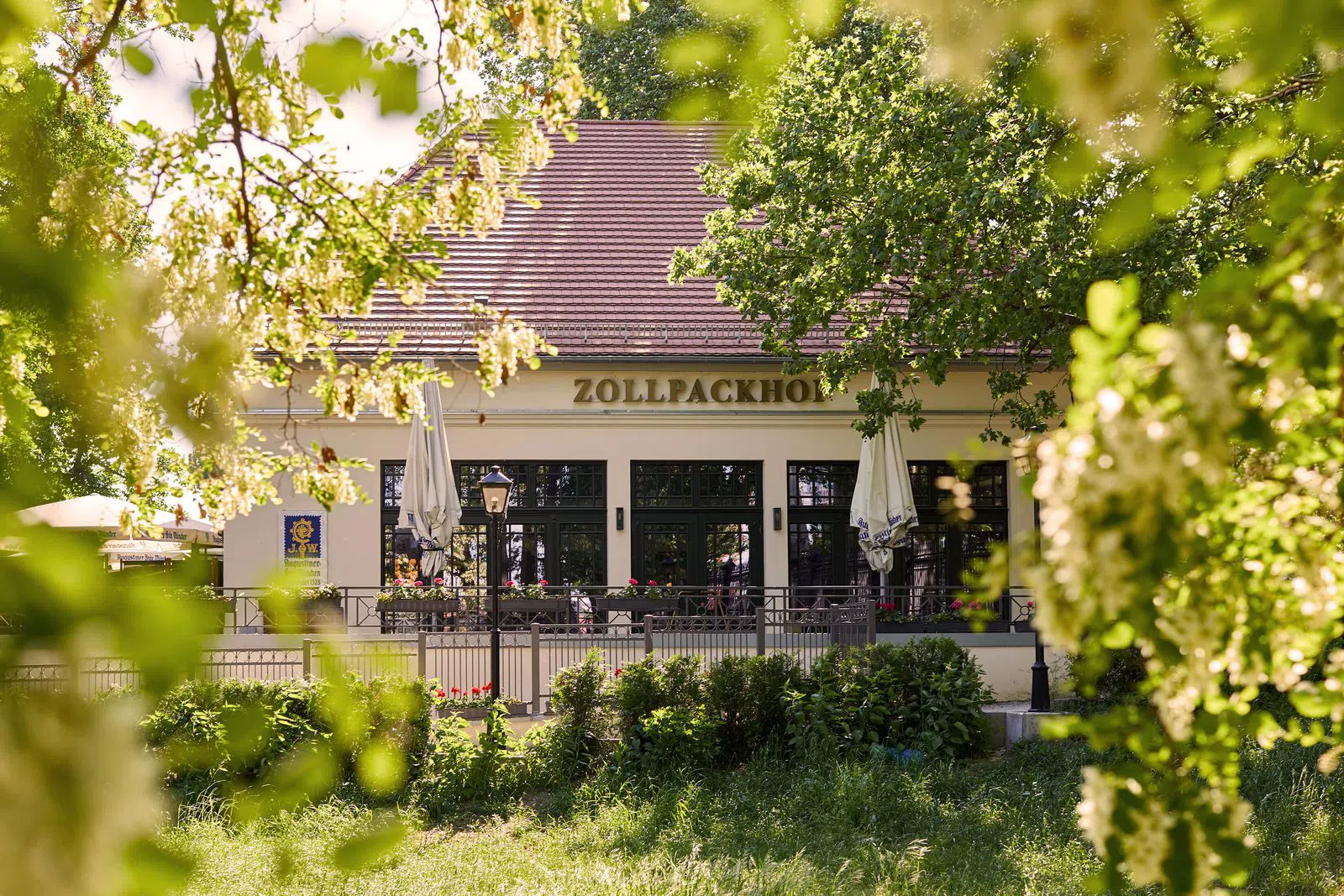
Zollpackhof is the other side of the finish zone, between Hauptbahnhof and the Chancellery, five minutes' walk from the crowds. The restaurant runs daily 12:00–23:00, Bavarian mains land around €15–28, and the beer is poured properly from wooden barrels. It is explicitly set up for groups and events, and it wants a booking for six or more; on marathon Sunday, make that a booking for four or more, because the whole finish area empties into these few streets at once.
When there are twelve of you and half the party is still carb-loading while the other half wants a litre of beer at eleven in the morning, the answer is Hofbräu Wirtshaus Berlin at Alexanderplatz. It is 6,500 square metres with a dedicated events team ([email protected]), open Sundays 10:00–24:00, mains €15–25 and a litre stein around €10. It is not subtle and it is not the Berlin anybody writes poetry about, but it is minutes from where the course passes the TV Tower, and it will seat a party that no other central kitchen will take on a Sunday.
What still runs when the roads don't
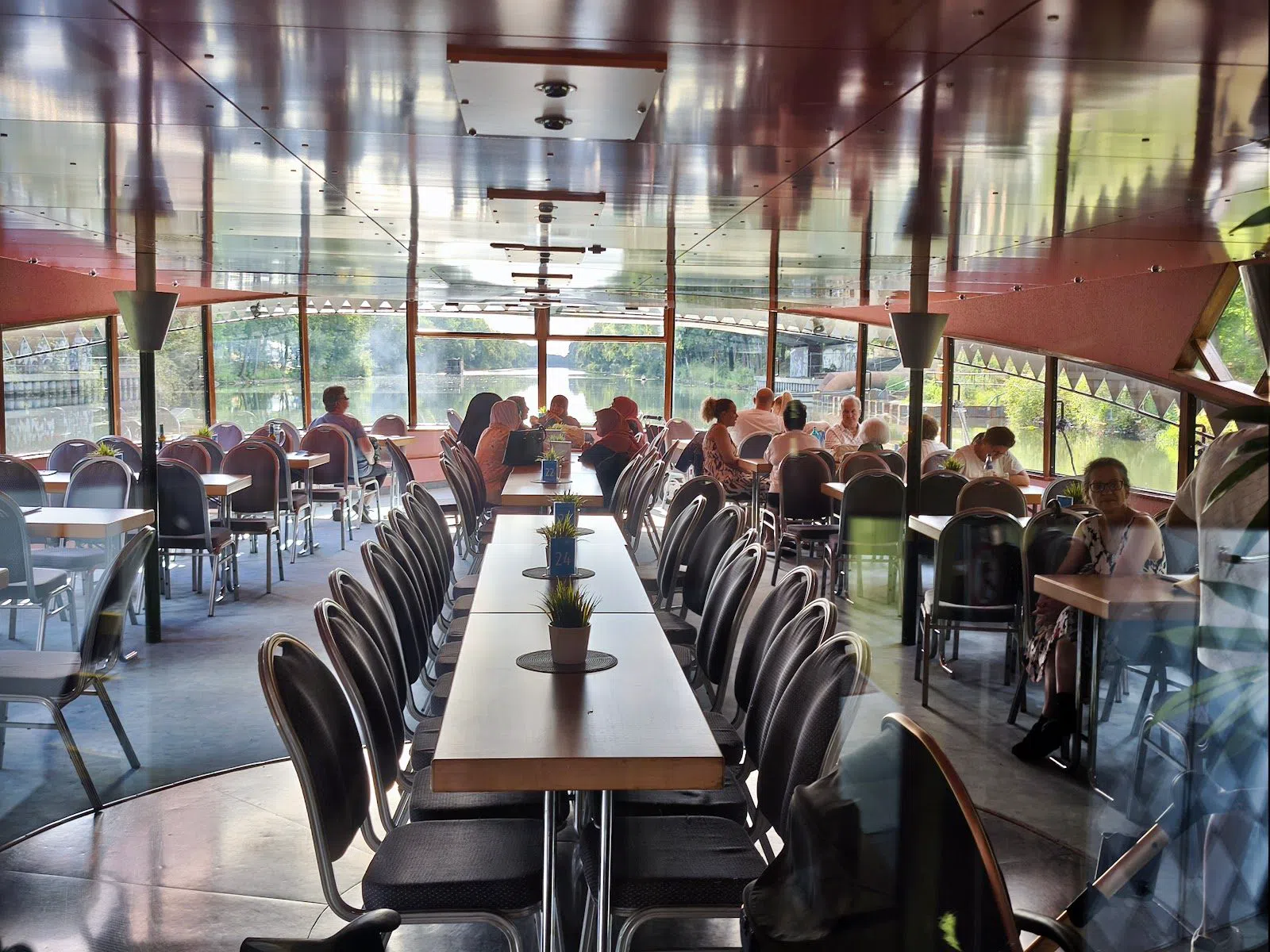
The city centre being closed to cars is the reason to get on the water. STERN UND KREISSCHIFFAHRT runs large-capacity boats with group tickets and charters available, departing from Friedrichstraße and the Nikolaiviertel, and the one-hour historical city cruise costs around €20–25. An hour past the Humboldt Forum, the cathedral and the TV Tower with not a single road crossing to negotiate is, on this specific morning, the only sightseeing route in the middle of Berlin that behaves normally.
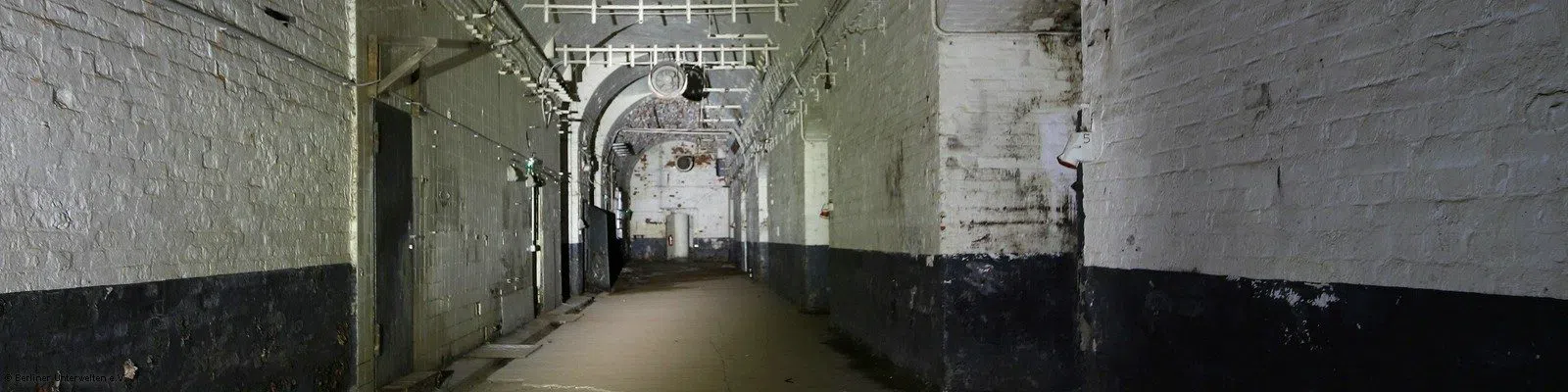
Berliner Unterwelten meets at Brunnenstraße 105, north of the closed roads, which is why the tours still work on race Sunday when half the walking tours in the centre do not. The Dark Worlds tour is €18, reduced €13, ninety minutes, group-sized and run daily in English. Booking is online only at tickets.berliner-unterwelten.de. There are no walk-ups at the meeting point, and the English departures sell out two to six weeks ahead in autumn. Book it the same day you book the flights.
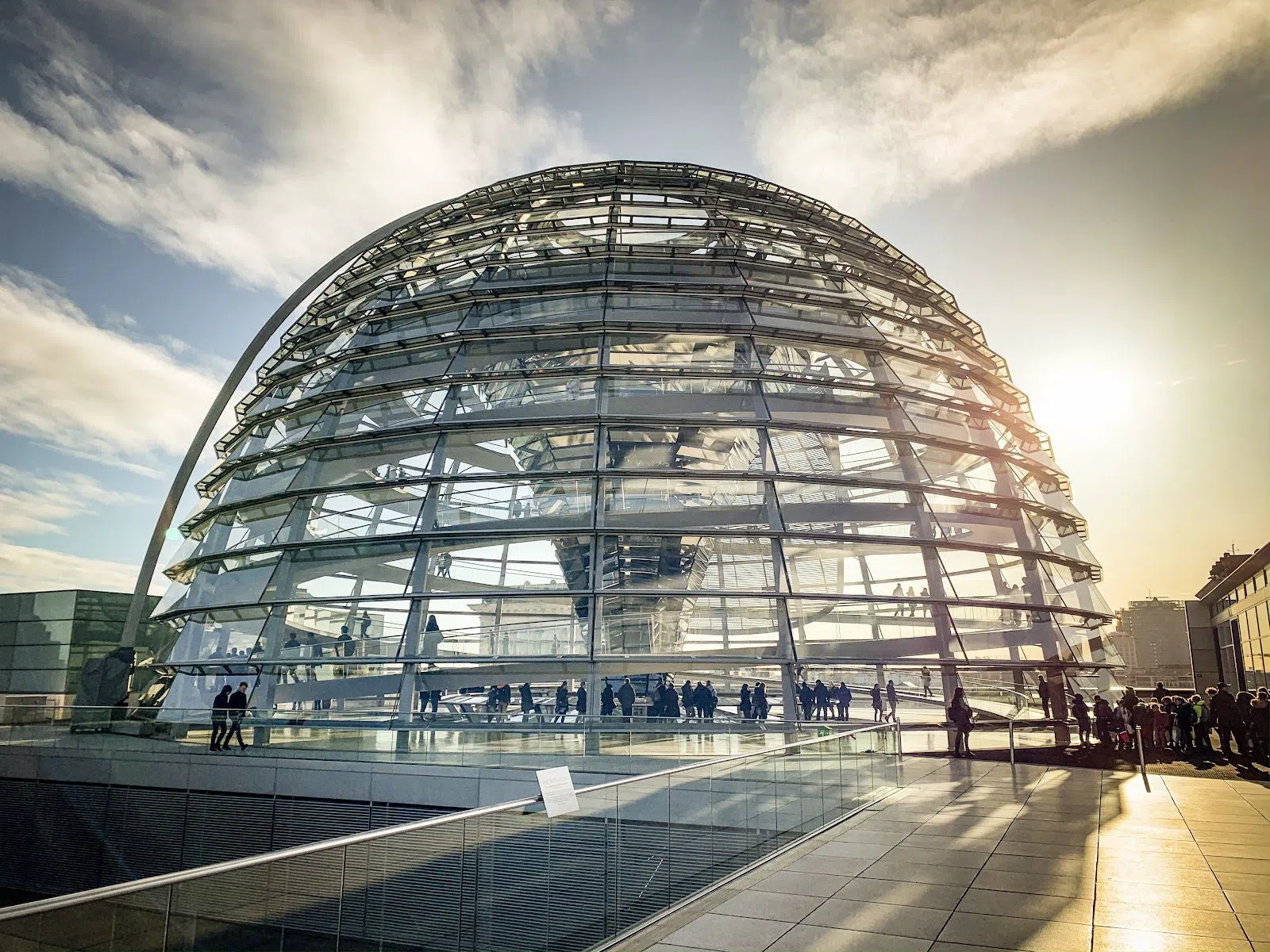
The Reichstag dome is free and, unusually for something free, needs the most administration. Every visitor must be registered in advance at visite.bundestag.de with passport or ID details, and September slots go weeks ahead. It is open daily 08:00–24:00 with last admission 21:45, and it closes for maintenance from 28 September to 2 October 2026, which makes race weekend the last window before it shuts. If the dome is on the list at all, this is the trip for it. Our wider Berlin guide covers the rest of the government quarter if you want to build a morning around it.
Two rooftops, one of them running out of season
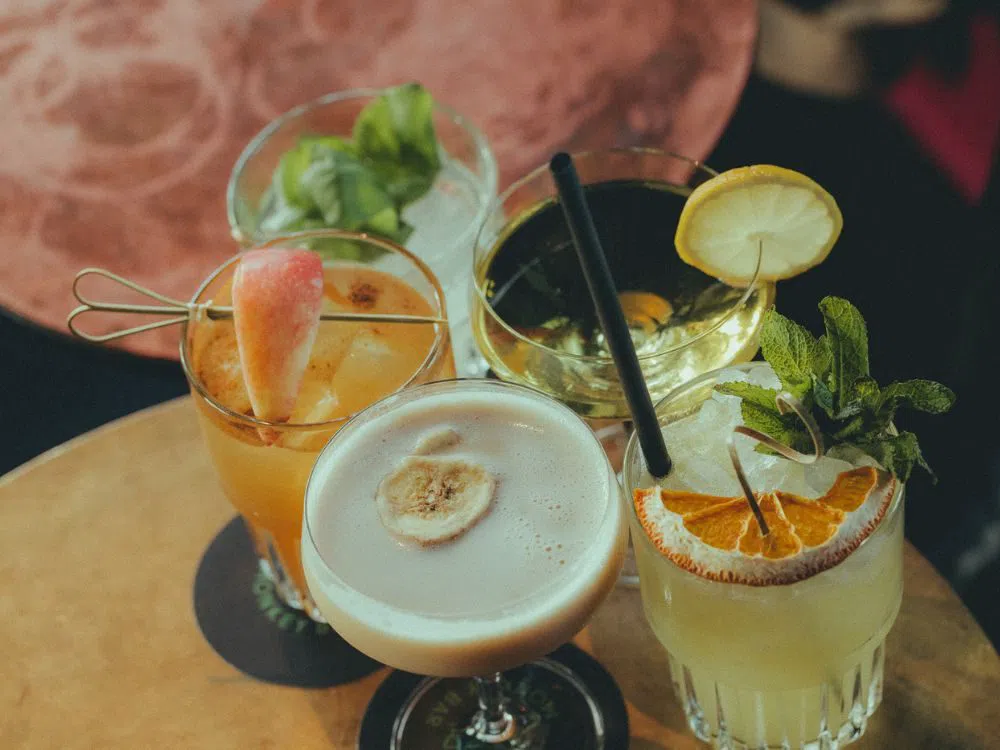
Klunkerkranich sits on the fifth deck of a car park roof on Karl-Marx-Straße in Neukölln, just south of the Hermannplatz stretch of the course, open Sunday 16:00–24:00. There is a small door charge, a few euros, and no strict door policy. Drinks are €5–9. The bottleneck is the lift up from the library entrance, which jams solidly around sunset, so either go early or take the stairs. The warning that matters more is the season, which closes around the end of September. Check the site the morning you plan to go rather than walking the group down there on faith.
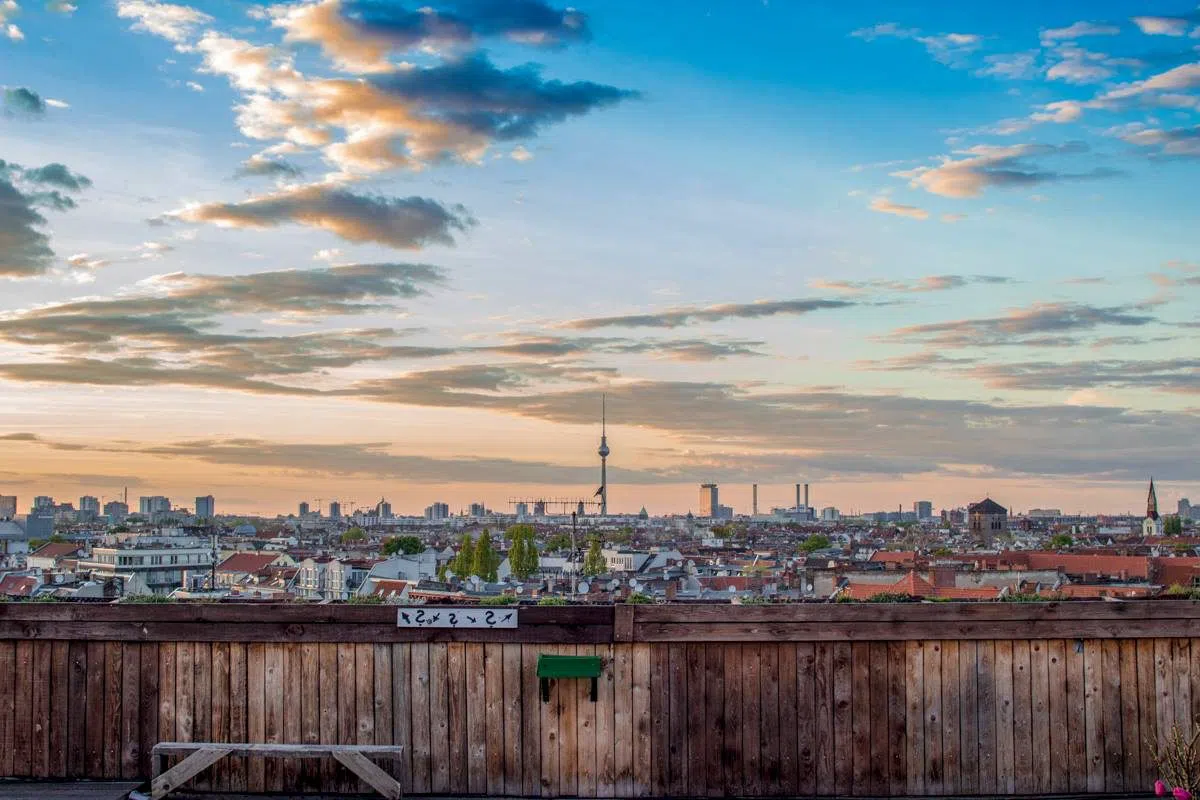
Monkey Bar in Charlottenburg is the western counterweight, an express lift from street level, no dress-code theatre at the door, cocktails around €13–16. It is walkable from the Charlottenburg part of the course and from Zoologischer Garten station, which makes it a natural pairing with an afternoon on that side of the park. Large groups should email ahead; the bar can also be hired exclusively, which is the realistic route if you are twenty people and want a guaranteed table on a Saturday.
Monday morning belongs to the legs
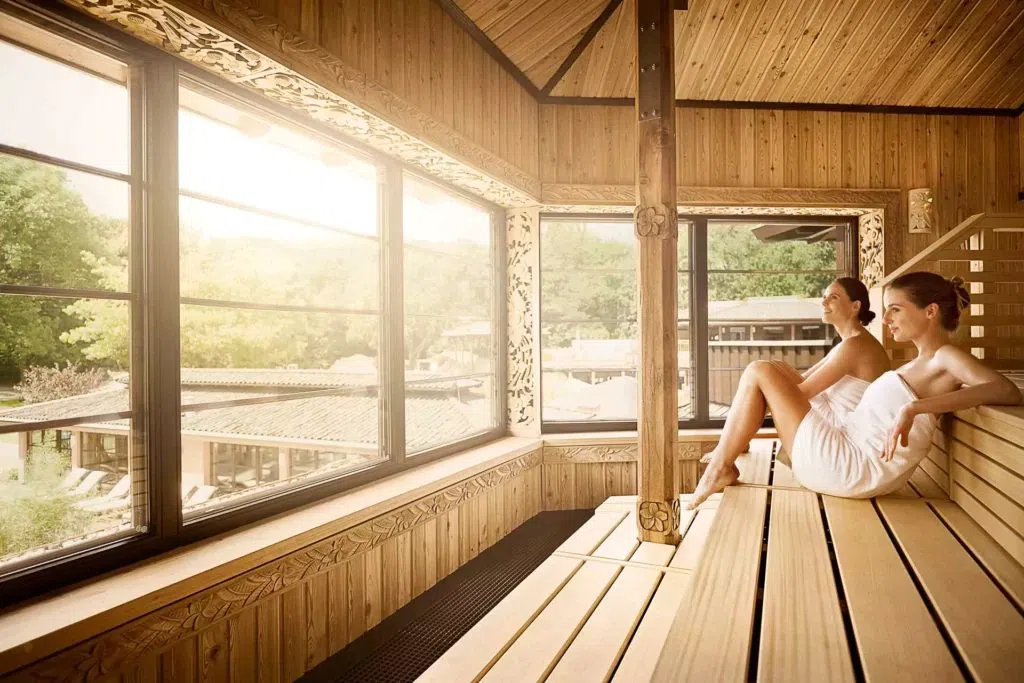
vabali spa Berlin on Seydlitzstraße is a ten-minute walk from Hauptbahnhof, open daily 9:00–24:00, and takes groups on standard tickets. Four hours is €36.50–39.50, a full day €48.50–53.50. Two conditions, and they are not negotiable: the saunas are strictly textile-free, and the quiet rule is enforced by staff. It suits a calm group and it does not suit a loud one. For legs that covered 42 kilometres the previous morning it is the best-value recovery in the city.
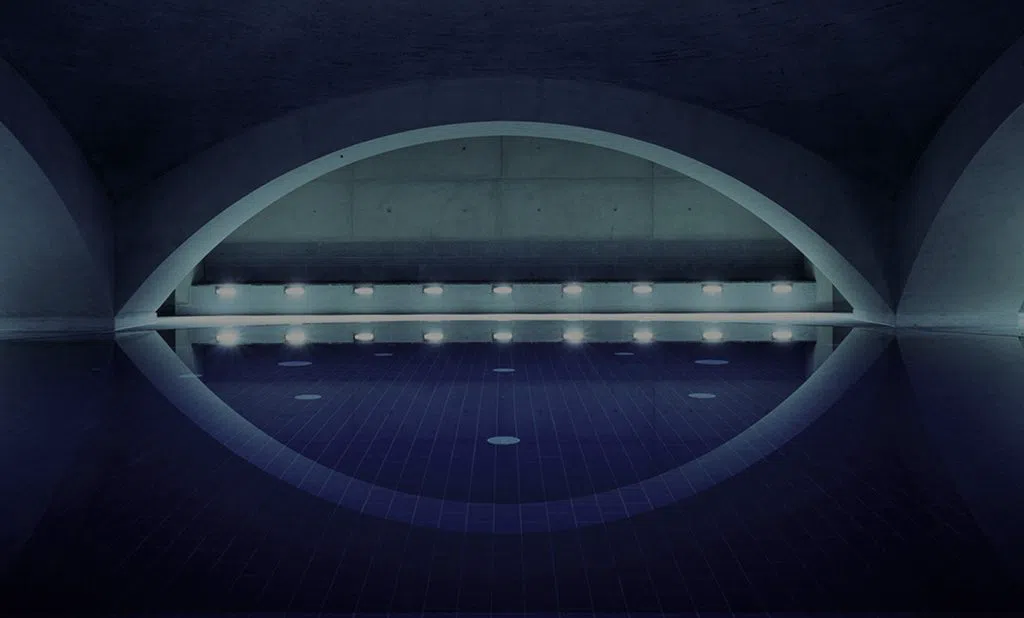
Liquidrom at Möckernstraße 10 in Kreuzberg is the alternative for anyone who would rather float than sweat. Roughly €25–35 buys two to four hours, it is open daily 9:00–24:00 and until 01:00 on Friday and Saturday, and capacity is limited, so reserve online, which costs €2.50 per person, especially for a group. The atmosphere is adults-only and silence is expected in the dome, where a 36°C saltwater pool has music played through the water itself. It is the least boring way to spend a rest afternoon in Berlin, and it asks nothing of your legs.
Practical notes
Transport. The U- and S-Bahn run under the closed streets all Sunday morning and are the only reliable way to cross the course; buses and trams inside the loop are diverted or suspended, and taxis simply cannot get through. Buy a day pass for zones A and B rather than singles (it pays for itself before lunch) and plan crossings by rail rather than on foot, because a road closure with runners on it can only be crossed at marshalled points.
Cash. Beer gardens, market stalls and imbiss counters in this city are still frequently cash-only or card-with-conditions. Konnopke's, Schleusenkrug and the Markthalle Neun counters are all safer with notes in your pocket; carry €60–80 per person for the weekend and stop worrying about it.
Timing. Book the Unterwelten English tour and the Reichstag dome registration weeks out, because both sell out and neither can be fixed on the day. Reserve the terrace at Café am Neuen See and a table at Zollpackhof before you fly. Eat at Konnopke's on Saturday, because it is shut on race day. Check Klunkerkranich's site before travelling south, because the season ends around now. And do the expo on Thursday or Friday if a runner is with you.
Beds. The city sells out for this weekend earlier than for almost anything else in its calendar, and the Tiergarten and Mitte sides of the finish go first. Start with a Berlin hotel search and take something on a U-Bahn line rather than something that looks close on a map, because the closures make Sunday walking distances longer than they look.
Budget. Two people can do the whole weekend on roughly €40–60 a day each for food and drink, covering a market lunch, a beer garden dinner and a rooftop round, plus the fixed extras: about €20–25 for the boat, €18 for the tour, nothing for the expo, the finish line or the dome, and €25–50 for a spa on Monday. The most expensive part of marathon weekend, for the people not running it, is the bed.
Before you go
Can non-runners get into the Berlin Marathon expo?
Yes. MARATHON EXPO by BRITA at Flughafen Tempelhof is free and unticketed, so nobody needs a bib or a registration and groups of any size can walk in. It runs Thursday 24 September 15:00 to 20:00, Friday 25 September 10:00 to 20:00 and Saturday 26 September 09:00 to 19:00 at Platz der Luftbrücke 5. Go Thursday or Friday if a runner is with you; Saturday afternoon is the crush.
Where is the best free place to watch the finish?
The standing grandstands on Straße des 17. Juni, on both sides of the road shortly before the line, with entry at the side of the Brandenburg Gate. They are free and open to anyone, but they fill, so arrive early. A paid seated grandstand on Unter den Linden is the alternative if someone cannot stand for long. For a second sighting, watch at Potsdamer Platz around kilometre 38 first, then walk the twenty minutes to the Gate.
How do you get around Berlin while the roads are closed?
By rail and by water. The U- and S-Bahn run under the closed course all Sunday morning and are the only dependable way to cross it; buses, trams and taxis inside the loop are diverted or stuck. A day pass for zones A and B is cheaper than three singles. A one-hour historical cruise with STERN UND KREISSCHIFFAHRT from Friedrichstraße or the Nikolaiviertel costs around €20 to €25 and crosses no roads at all.
Is the Reichstag dome open on marathon weekend 2026?
Yes, and it is the last window before it shuts: the dome closes for maintenance from 28 September to 2 October 2026. Entry is free but every visitor must be registered in advance at visite.bundestag.de with passport or ID details, and September slots go weeks ahead. Opening is daily 08:00 to 24:00, last admission 21:45.
Where can a large group eat near the finish line?
Zollpackhof, between Hauptbahnhof and the Chancellery, is five minutes from the finish zone, open daily 12:00 to 23:00, and wants a booking for six or more. Café am Neuen See is ten minutes through the park, open 9:00 to 24:00, and takes reservations for serviced terrace tables. For a dozen people or more, Hofbräu Wirtshaus Berlin at Alexanderplatz has 6,500 m² and an events team at [email protected], and it opens Sundays from 10:00.